Winged wonders
In September 2025, Taymouth Castle began working with local bird surveyor Caleb Wellock to enable regular and ongoing observations of the bird species across the estate to be recorded. Bird populations are widely recognised as an important indicator of environmental health, and these surveys will help inform how improvements across the estate could further support biodiversity.
The habitats monitored range from deciduous and coniferous woodland to river edges and the golf course. The initial survey recorded 40 different bird species, of which 11 are listed on the British Trust of Ornithology’s (BTO) Birds of Conservation Concern Amber List, identifying species whose populations are in decline or at risk. In addition, two species were recorded on the Red List, highlighting birds that are considered globally threatened.
One particularly rewarding aspect of the survey was the presence of a good number of Eurasian Goldcrests. Britain’s smallest bird, the Goldcrest, weighs just 5-7 grams, about the weight of six paperclips or a 20 pence piece. Despite their tiny size, migratory Goldcrests undertake remarkable journeys each autumn. Tens of thousands, perhaps even millions, cross the North Sea to join Britain’s resident birds. This means that some of the Goldcrests spotted around Aberfeldy may have been in Scandinavia, or even as far as Russia, only a few months earlier.
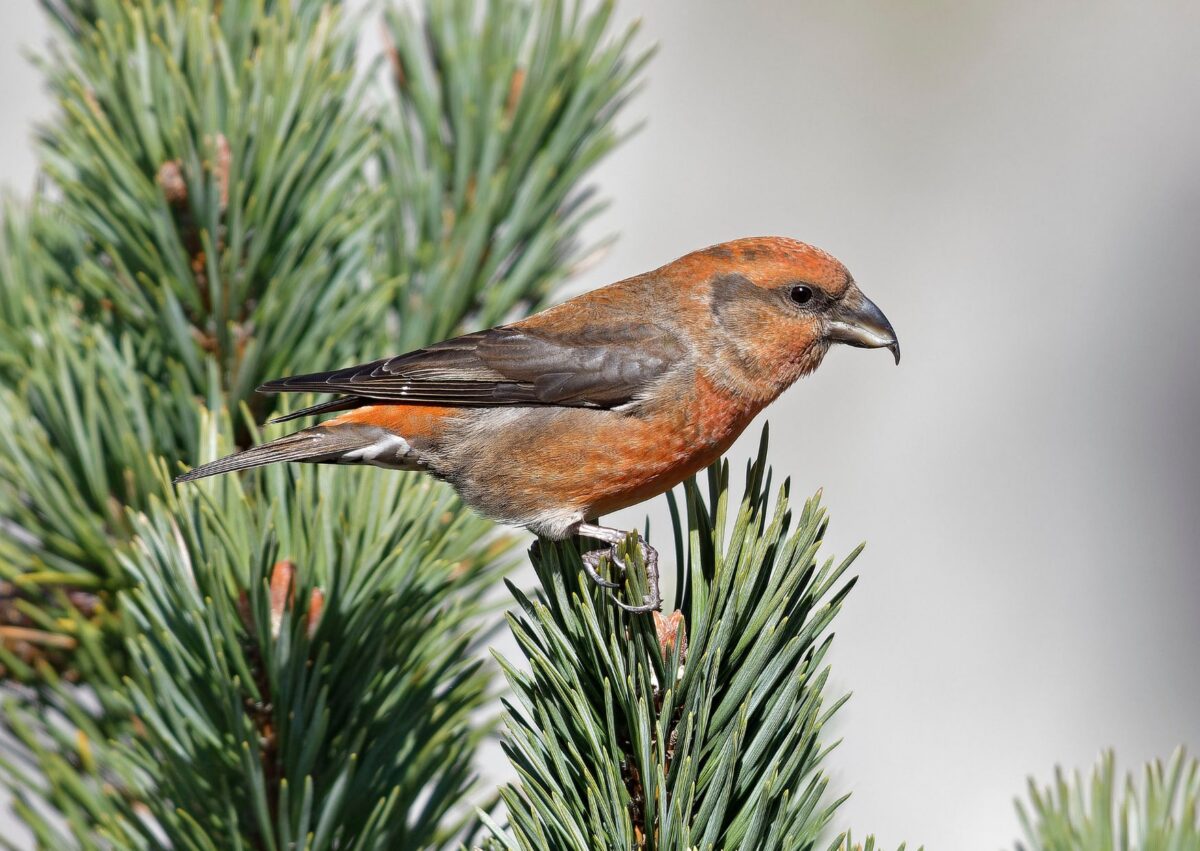
Another highlight of the initial surveys was observing the Common Crossbill in Newhall Wood. Crossbills are aptly named because their upper and lower mandibles do not meet in a straight line, but instead cross over at the tips. This unique adaptation allows them to pry open conifer cones and extract the seeds inside. Crossbills often snip cones from trees and hold them securely with one foot while feeding, removing the seeds before dropping the cone to the ground. Thanks to a near-constant supply of food in certain areas during winter, Crossbills can begin breeding as early as February, even while snow is still falling. Three species of Crossbill are found in Britain, including the Scottish Crossbill (Loxia scotica), which is the UK’s only endemic bird species. Footage recorded during one of the surveys can be viewed below.
These bird surveys will continue annually from March to June, with additional monitoring taking place during the autumn and winter months. We look forward to sharing future observations and discoveries from across the estate.